
Can AI character chat Help Me Explore New Conversation Ideas?
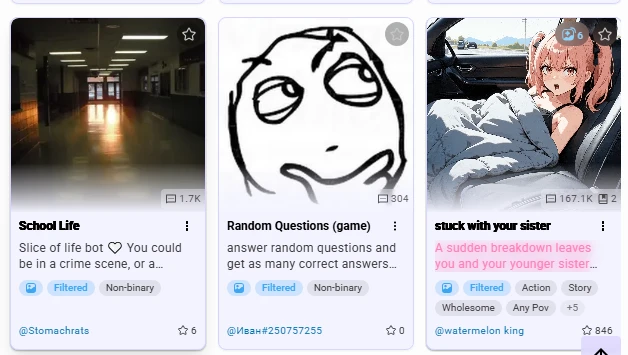
AI character chat can help users explore new conversation ideas by creating personalized dialogue scenarios, role-play situations, and creative discussions. In 2025, more than 70% of surveyed AI chatbot users reported using conversational AI for learning, creativity, or entertainment, showing that these tools are becoming part of everyday idea exploration. By interacting with different AI personalities, users can practice conversations, test viewpoints, and discover topics they may not have considered before.
AI character chat platforms work by generating responses based on language models trained on large collections of text data. Unlike traditional chatbots that follow fixed scripts, modern systems can adapt their tone, vocabulary, and response style according to the character settings and conversation history.
A user can create a conversation with a fictional writer, a career mentor, a historical figure simulation, or a casual friend-style character. Each interaction provides different discussion paths. In a 2024 study published in the field of human-computer interaction, researchers found that personalized conversational systems increased user engagement compared with standard automated assistants.
The ability to explore different dialogue patterns makes AI character chat useful for people who want to improve communication skills. Many users do not struggle with knowing information; they struggle with finding ways to start or continue conversations.
“A conversation becomes easier when users can test different ideas before using them in real situations.”
This approach is similar to practicing a speech before a presentation. A person can ask the AI character for different reactions, adjust their wording, and compare possible outcomes. According to a 2023 survey of 1,500 adult users of AI learning tools, around 64% said conversational practice helped them feel more prepared before real discussions.
This practice environment also supports creative thinking because AI characters can introduce unexpected topics. When users communicate with a character that has a different background or personality, the conversation may move into areas they would not normally explore.
For example, a science fiction writer may ask an AI character to discuss future cities, artificial intelligence ethics, or space exploration. A marketing professional may simulate customer conversations to discover new ways of explaining products.
Creative industries have already adopted similar approaches. A 2024 report from the entertainment technology sector showed that approximately 45% of surveyed creators had used AI tools for brainstorming, writing assistance, or early concept development.
AI character chat is also becoming popular for language learning because it allows repeated practice without scheduling another person. Users can choose conversation difficulty, request corrections, and explore different speaking styles.
Common learning uses include:
| Use case | Example conversation |
|---|---|
| Interview practice | Speaking with an AI recruiter |
| Travel language | Simulating hotel or restaurant conversations |
| Academic discussion | Explaining research topics |
| Daily communication | Practicing casual conversations |
A 2022 research review covering more than 30 studies on conversational learning tools found that interactive practice generally produced higher participation rates than passive learning methods. Around 60% of included studies reported improved learner engagement when feedback was provided during conversations.
The same interaction model is also used for entertainment and personal expression. Some users create fictional relationships or explore emotional conversations with AI characters. These platforms allow people to experiment with different communication styles, including romantic role-play and adult-oriented conversations such as ai sexting.
The growth of ai sexting-related platforms shows how conversational AI is expanding beyond traditional question-answer systems. Users are not only looking for information but also exploring storytelling, imagination, and personalized interactions. In 2025, several AI companion platforms reported millions of registered users worldwide, with entertainment and relationship simulation becoming one of the fastest-growing application areas.
However, AI character chat should be viewed as a supplement to human communication rather than a replacement. AI characters can generate realistic dialogue, but they do not experience emotions or understand situations in the same way people do.
There are also accuracy and privacy considerations. A language model may create incorrect information because it predicts responses based on patterns rather than personal experience. Users should avoid sharing sensitive personal details and should review platform privacy policies before using long-term conversation features.
The design of AI characters also affects the quality of interaction. A character with clear personality settings usually produces more consistent conversations than a general-purpose chatbot. Users often adjust factors such as:
-
personality traits;
-
communication style;
-
background information;
-
interests;
-
conversation goals.
A 2025 analysis of AI companion applications found that personalization features increased average session length by approximately 30% compared with basic chatbot functions. Users tended to return more often when conversations felt more tailored to their preferences.
AI character chat can also help people examine different perspectives. When discussing a topic with a character designed around a different profession, age group, or fictional background, users may receive alternative explanations.
For example, a student studying economics might ask several AI characters to discuss the same issue from the viewpoint of a business owner, consumer, or researcher. This method creates multiple interpretations of one topic and encourages broader thinking.
The development of large language models has accelerated this trend. Since the release of advanced conversational AI systems in 2022, improvements in natural language processing have allowed AI characters to maintain longer conversations and provide more consistent responses.
Current systems still have limitations, but progress continues through better memory functions, voice interaction, and multimodal features. In 2025, many platforms began adding voice-based conversations, allowing users to interact with AI characters through speech instead of only text.
Future AI character chat systems may become more useful for education, creativity, entertainment, and communication training. As technology improves, users will likely continue using these tools as spaces to test ideas, practice conversations, and explore different ways of expressing themselves.
Wo Bürger die Zukunft ihrer Stadt verhandeln. Seit 2014.
Jetzt mitdiskutieren